Research showed that although young people considered Citroën very comfortable, they also saw it as lacking sportiness and dynamism. That had to change, and Citroën decided it was time for a new image. The first results became apparent in late 1984, when the Visa GTI and CX GTI Turbo were unveiled. In March 1985, the third sporty model appeared: the BX Sport.
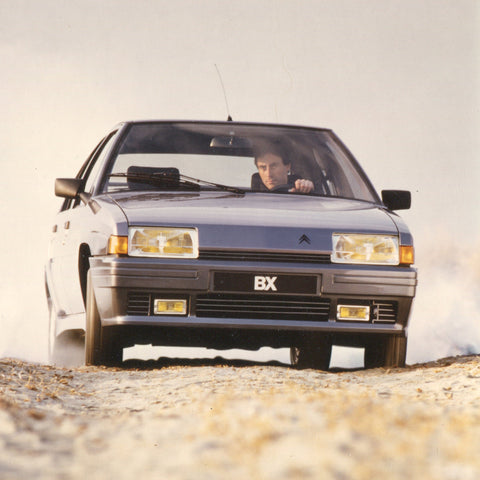
The car featured new bumpers, a huge rear spoiler, side skirts, fender extensions and new alloy wheels. The sharply sculpted rear fender also looked exceptionally menacing. In terms of equipment, the Sport's interior was comparable to that of the 19 GT. A new three-spoke sports steering wheel and a special gear knob emphasized its tough character.

Under the hood was the engine from the BX 19 GT, modified to deliver 20% more power: a jump from 105 to 126 hp. That was enough for a 0-to-100 sprint in 8.9 seconds and a top speed of 195 km/h. In practice, the BX Sport turned out to be capable of going a little faster still...
Initially, the BX Sport was available only in two shades of gray. A few examples were also painted red purely for demonstration purposes. Citroën originally intended to build just a one-off run of 2,500 Sports. However, the BX Sport proved to be a hit. The press and the public were enthusiastic. So, from the 1986 model year, Citroën added the Sport to its regular lineup. From then on, the Sport was also available in red, black and white. A right-hand-drive version was also introduced. Its success continued until June 1987, when the BX GTI 16v arrived on the market and replaced the Sport. Today, the BX Sport is a popular modern classic.